
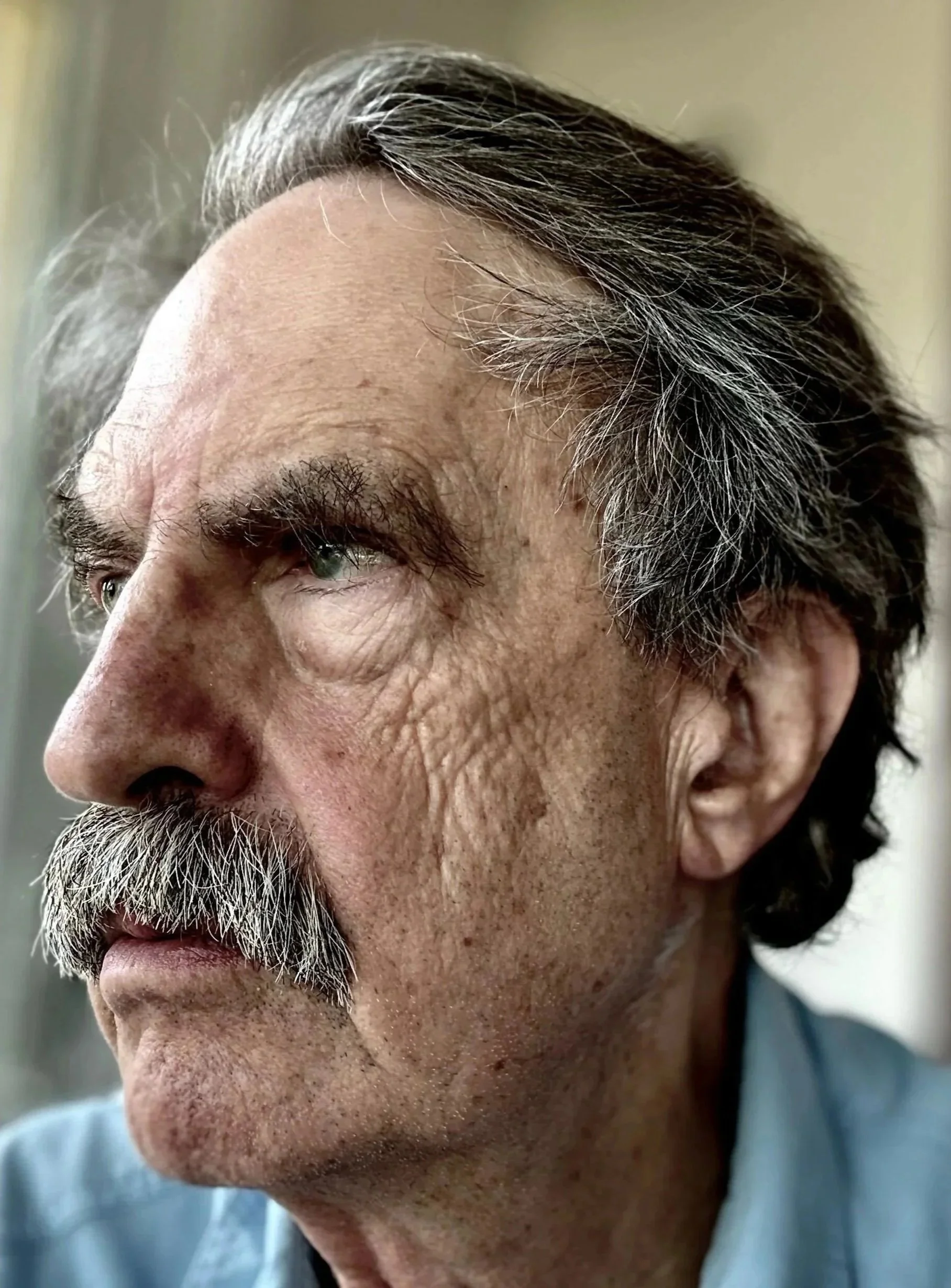
James Howe, professor emeritus at MIT, is an anthropologist, historian and photographer, known primarily for studies of the culture, politics, and history of the Guna of Panama.
Over the course of more than fifty years, Professor Howe has published studies of local-level politics, resistance and rebellion, missionization, writing and literacy, communal celebration, and the process of ethnography.
Participant Observation &
Research Collaboration
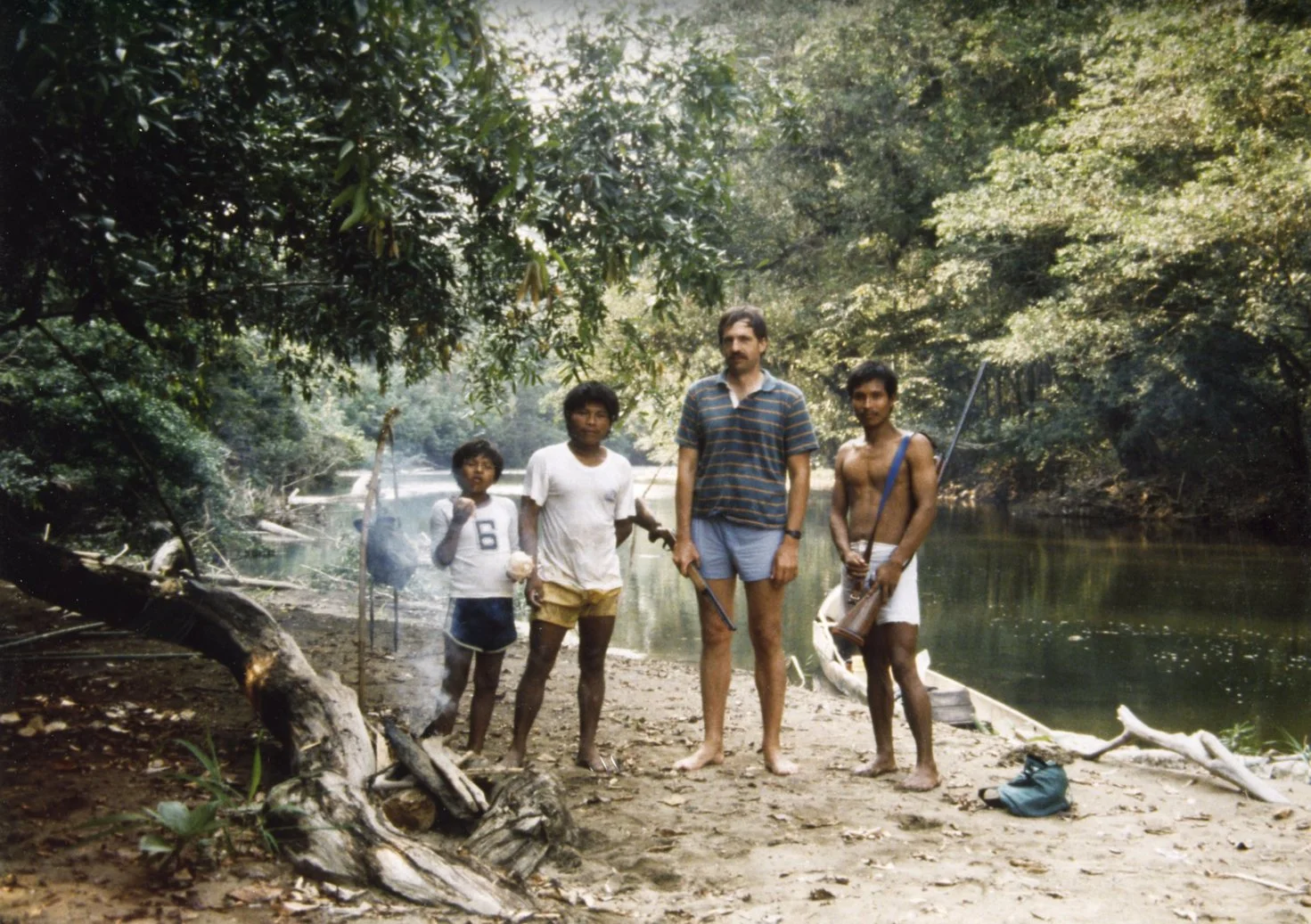
With Emberá travelling companions, headwaters of Tuira River, Darién, Semana Santa 1985
Throughout his career, Howe has worked closely with indigenous anthropologists and political authorities, as well as with Latin Panamanian colleagues; and on numerous occasions he has been called upon to address Guna audiences in their own language. In his historical research, Professor Howe has combined written and oral sources, and in all of his work he has taken pains to integrate indigenous and external perspectives.
Notable examples of indigenous collaboration include The Art of Being Kuna (1997-2002), a project led by the late Mari Lyn Salvador, for which James Howe negotiated Guna permissions and participation, co-hosted Guna delegations attending exhibit openings, translated speeches, and facilitated research for the project.. He also did the same for his own photo exhibit and book on Guna chicha ceremonies. The Guna Cultural Congress was principal sales agent for one of his books (Howe 2004), and co-publisher for the photo-ethnography (2016).
In the 1970s and early 1980s, Howe’s studies of local-level politics emphasized close observation and field recording of process and action. In the 1980s and 1990s, his study of indigenous-state conflict---which culminated in 1925 with the now-famous “Revolución Dule”---placed detailed accounts of political action and reaction within the macro-context of Panama/U.S. relations. A third project turned the analytical gaze back onto ethnography itself, with emphasis on pioneering native anthropologists and on Guna encouragement of foreign writing as a form of public relations.
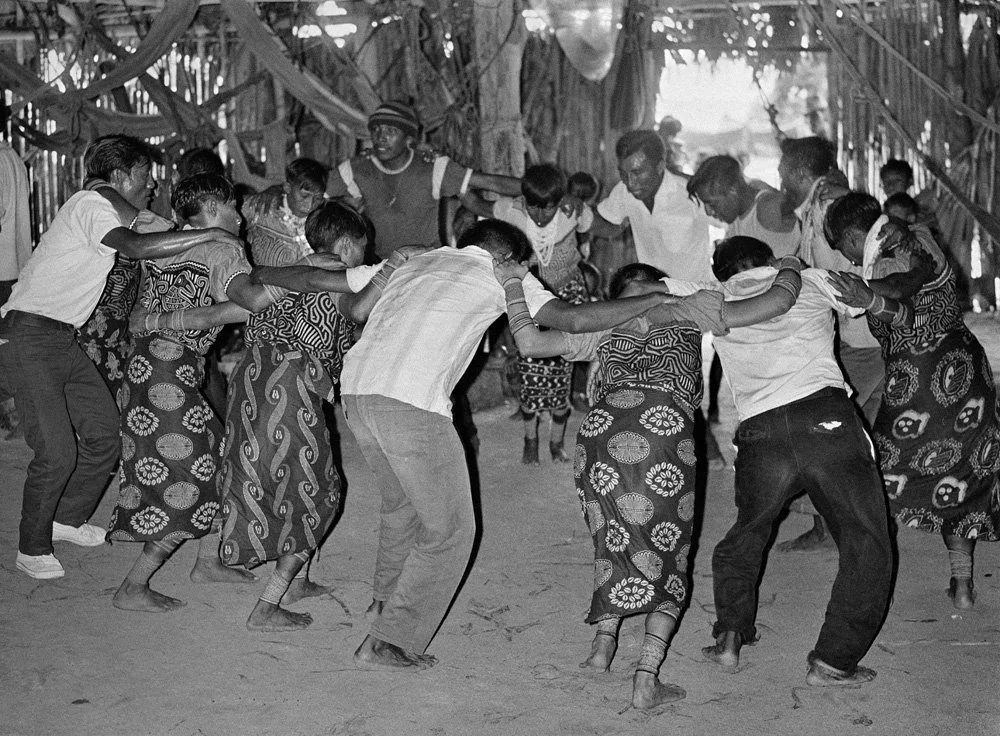
Two projects resurfaced after long delays. Photographs taken in the early 1970s of Guna communal celebrations, re-edited many years later, were exhibited in Panama in 2011 and published in a bilingual photo-ethnography in 2016. The memoirs of an outspoken Jesuit missionary, a publication project that collapsed in the early 1990s, were revived and published online with added footnotes and analytical text in 2020.
James Howe is currently completing a book manuscript on binaries and duality, and he has finished research for a final work on Guna history, to be focused on party politics, constitution-writing, and consolidation of autonomous governance.
At the same time, Howe is working to make the primary materials generated by his studies available to colleagues and to the Guna public, and to put working papers into circulation, with the goal of fulfilling the obligations created by research funding and indigenous collaboration. The archives of indigenous language called AILLA at the University of Texas hold more than eighty-five recordings of texts, music, and live events from Howe’s Guna research ---all freely available to the public. An audio disk of mytho-historical texts narrated by the late Gonzalo Salcedo was distributed among the Guna in 2020. Digitized research materials have been made available to colleagues, and more will be available as scanning proceeds. In collaboration with Bernal Castillo, Howe has begun preparations on a small collection of primary documents for distribution at the centennial of the Revolución Dule in 2025.